
How to Teach Road Safety: Creative Ideas for Schools
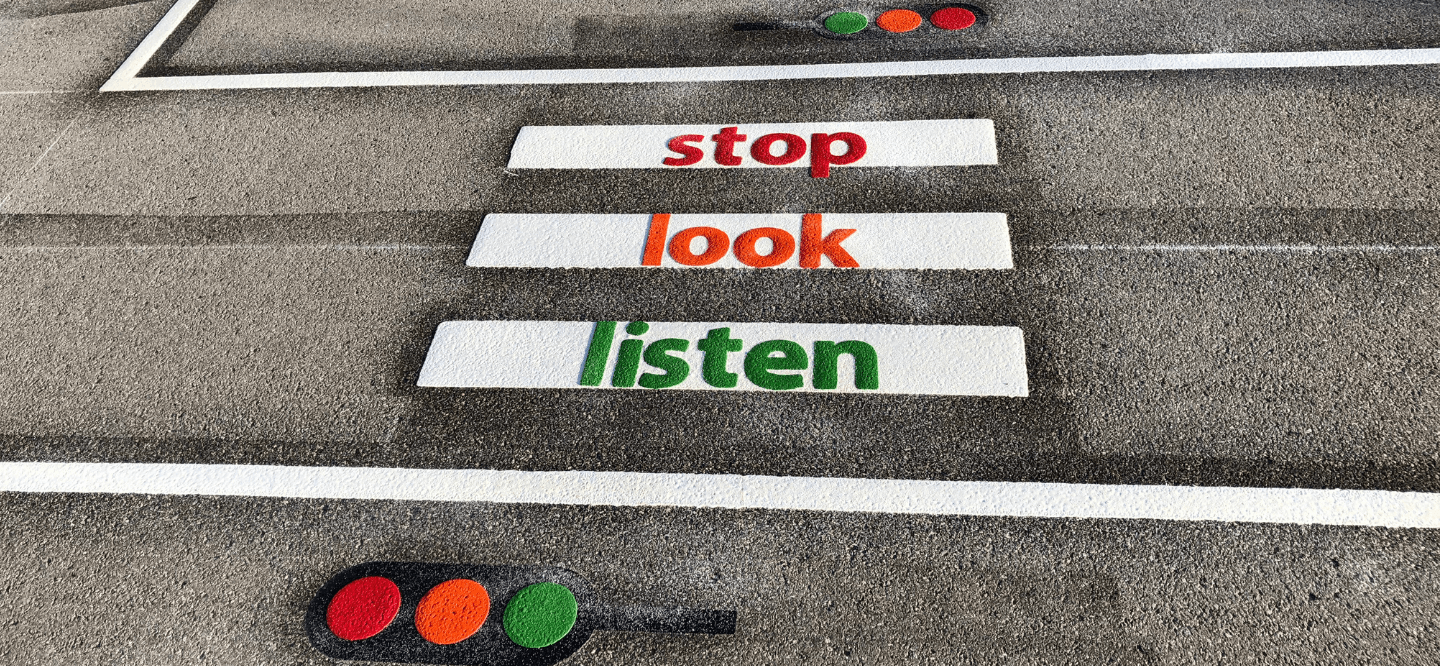
Teaching road safety means giving children the knowledge and habits to stay safe near traffic, from the Green Cross Code to using crossings properly and behaving sensibly in cars and buses. Schools teach it best by combining classroom lessons with regular, hands-on practice on playground road markings, where pupils can rehearse crossing a road with no traffic around.
Why is it important to teach road safety to children?
It is important to teach road safety to children because they are at real risk of road traffic incidents if they have not learned how to behave near roads, and that understanding shapes how safely and independently they can get about.
Road safety is relevant at every age. Young children need to learn the basics of stopping, looking and listening while holding an adult's hand, while older primary pupils are getting ready to walk to school, catch a bus or visit friends with more independence. Lessons in class give children the rules, but children only build safe habits by practising them, which is why so many schools now teach road safety outside as well as inside the classroom.
How can schools teach road safety outside the classroom?
Schools can teach road safety outside the classroom by installing playground road markings such as crossings, traffic lights and road layouts, so pupils can practise what they have learned in lessons in a realistic but traffic-free setting at break time and during planned sessions.
Playground markings help children visualise and remember road safety rules, whether they walk to school or travel by bus. Acting out a crossing, waiting at a red light or following a road layout turns a rule into a habit. Interactive play on the markings also helps children develop social and communication skills, as they take turns being pedestrians, drivers and crossing patrols, and talk through what each person should do.
We have worked with many schools and nurseries to create playgrounds that teach essential knowledge such as road safety, often as part of a wider layout of roadway playground markings that pupils also use for active play.
Which playground road markings help teach road safety?
The playground road markings that help most with teaching road safety are traffic lights, zebra crossings, red and green man signals, road signs, local road maps and stop, look, listen characters, because each one mirrors a situation children meet on the way to school.
Traffic lights
Traffic lights are the most basic road symbol and can be taught from a very young age. Thermoplastic traffic light markings help children learn what each colour means and reinforce the stop, look, listen routine before crossing.
Zebra crossings
Every young pedestrian needs to know how to use a zebra crossing. Combining zebra crossing markings with traffic lights gives children a firm grasp of how and where to cross safely.
Red and green man signals
Markings of the red and green man used at light-controlled crossings, such as pelican and puffin crossings, teach children that they only cross when the green man shows and never when the red man is lit.
Stop signs and one way signs
Brightly coloured stop and one way signs on the playground teach children when to stop and when it is safe to go. The colours are especially useful for younger children who cannot yet read road signs but will remember what the bright colours mean.
Road maps of the local area
A road map of the local area, with pictures of vehicles, people, bicycles and dogs, lets children practise their route around the school grounds and talk about the hazards they might meet on the way home.
Stop, look, listen characters
Road safety characters help young learners picture where and when it is best to cross. They give teachers a friendly prompt to come back to whenever pupils use the markings.
Many schools pair these features with road track playground markings, so children can practise as both pedestrians and drivers on the same layout.
How do you teach the Green Cross Code to children?
You teach the Green Cross Code to children by breaking it into simple steps they repeat every time: find the safest place to cross, stop, look and listen, wait until it is safe, and keep looking and listening as you cross.
- Find the safest place to cross, such as a zebra crossing, a light-controlled crossing or a place with a clear view of the road.
- Stop near the kerb, without stepping into the road.
- Look and listen for traffic in all directions.
- Wait until there is no traffic coming, or the traffic has stopped.
- Cross carefully, still looking and listening, until you reach the other side.
Practising these steps on a playground crossing lets children repeat them often enough that they become automatic, and teachers can watch and correct each child as they go.
Which resources help teachers teach road safety in the classroom?
Teachers can use resources from Brake, the road safety charity, and THINK!, the government's road safety campaign, which offer advice, tips and lesson ideas for teaching children of different ages how to stay safe around traffic.
Brake also runs Road Safety Week, which many schools use as a focus for assemblies and activities, and THINK! Road Safety provides advice and resources for teaching children of different ages. Road safety lessons often sit within PSHE, and playground markings give those lessons a practical follow-up outside.
How can children stay safe in cars and on the school bus?
Children can stay safe in cars and on the school bus by always wearing a seat belt, staying seated while the vehicle moves and keeping every part of their body inside, and these rules are worth teaching alongside crossing the road.
- Always wear a seat belt.
- Stay seated while the vehicle is moving.
- Do not move around inside a moving school bus.
- Hold the handrail on the bus for support as it comes to a stop.
- Never put any part of the body out of the window of a moving vehicle.
How can parents and teachers set a good road safety example?
Parents and teachers set a good road safety example by following the same rules they teach, every time they are near a road with children, because children copy what the adults around them do far more than what they are told.
Use crossings properly, wait for the green man and talk through what you are doing as you cross. When children use the playground markings, point out the symbols and explain what each one means in real life, then do the same on the walk to and from school. If adults practise road safety consistently, children will follow their lead.
How does Uniplay design road safety playground markings?
Our in-house design team creates road safety playground markings for primary schools, nurseries, high schools, councils and community groups, either from our catalogue of road graphics or as a bespoke design built around your curriculum and your pupils' needs.
Road safety markings can be combined with educational markings, traditional games and number grids in one layout, and we can adapt designs to support children with special educational needs. Our markings are non-toxic and anti-slip, they are ready to use within 30 minutes of installation, and they carry a manufacturer's warranty of up to 4 years, subject to ground condition. We also work with councils on road safety outside schools, such as our active travel and road safety project with Blackburn with Darwen Borough Council.
To talk about road safety markings for your school, call our team on 0333 321 6699 or email info@uni-play.co.uk. You can also browse our full range of thermoplastic playground markings.
See the full range in our brochure
Download our brochure for the full thermoplastic range, from games and sports courts to sensory and educational markings. Get a free design and quote whenever you are ready.
All prices include installation, and every quote is fully itemised.
- Full range in one PDF
- No obligation
- Free design and quote when you are ready
More from the blog
How-to encourage self-awareness at your school
Self-awareness is an important part of childhood development, particularly in the primary school years, which will set the foundation for children to develop
Inclusive Playground Design: Markings That Work for Every Child
How inclusive playground design helps every pupil play, including children with SEND, with sensory paths, calm zones, emotion markings and planning tips.
Learning with math playground clock games
Math playground clock games continue to be one of the most sought-after playground markings, with many teachers keen to develop their pupil’s understanding of