Traditional Playground Games: Why They Last and How to Play
Traditional playground games are simple, long-established games such as hopscotch, duck duck goose, Twister, noughts and crosses and piggy in the middle that children have passed on to each other for generations. They stay popular because they are easy to learn, need little or no equipment and build balance, counting, turn-taking and friendships, and permanent thermoplastic markings keep them ready to play every day.
New games are invented all the time, by toy companies and by creative children, yet the oldest ones keep their appeal. Below we look at why, how the best-known games are played and how schools can bring them into the playground with markings.
Why are traditional playground games still so popular with children?
Traditional playground games are still popular because they have very few rules, so even the youngest children can join in without the embarrassment of not knowing how to play, and they can be enjoyed alone, in pairs or as a big group with no equipment to set up.
They are also more than nostalgia. In the schools we work with, we see traditional games encourage physical activity alongside teamwork, patience and problem solving. Familiar games give shy or unsure children a clear structure and an easy way into social play, and a game such as hopscotch can be played solo or as a competition, so every child can take part at their own level.
Which traditional playground games work best on school playground markings?
The traditional playground games that work best on school playground markings are hopscotch, duck duck goose, Twister, noughts and crosses and piggy in the middle, because each one has a simple layout that can be marked permanently on the playground and played straight away.
Hopscotch
Hopscotch is often said to date back to Roman times, and it was being played in Britain by the 17th century under names such as "scotch-hoppers". It has since been played in the UK, the US, Italy, Spain and beyond, and in Cuba it is known as pon.
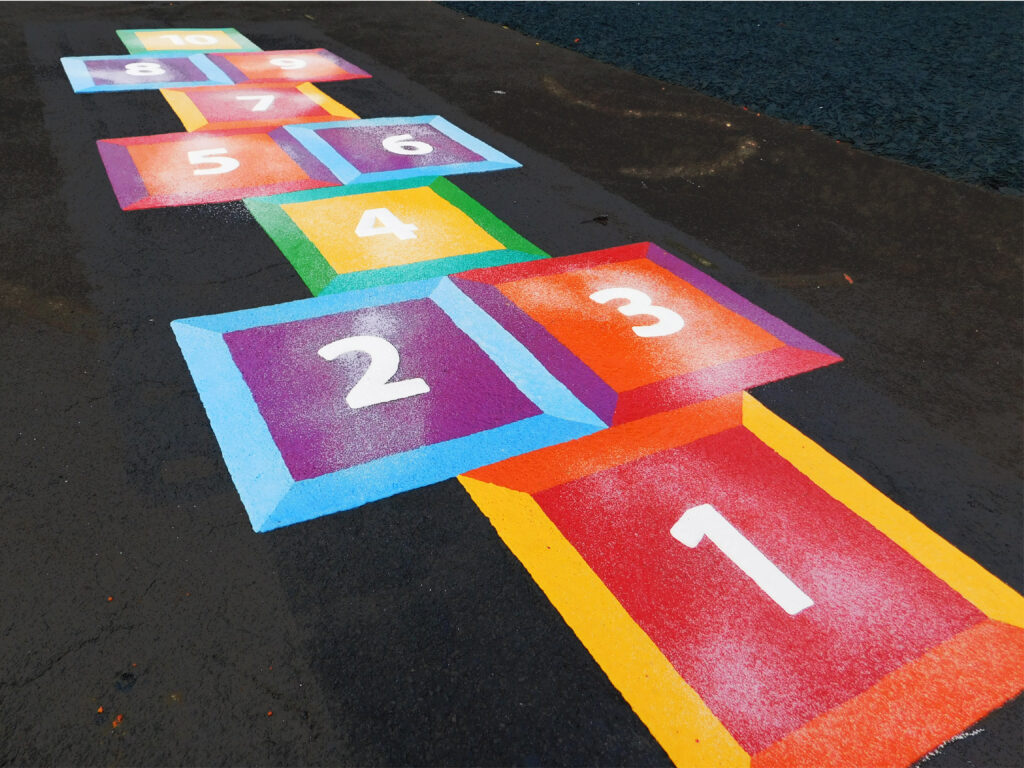
The ground is laid out as a grid of numbered boxes. The player throws a small item, such as a stone or beanbag, into a box, then hops or jumps through the boxes to reach it and make progress in the game. The trick is to throw the item into the right box, not short of it and not so far that they cannot hop all the way there. That helps children learn when to take a risk and to understand their current limits, while practising balance, coordination and counting.
As well as a traditional layout, our hopscotch playground markings come in many variations, including Roman numeral, leaf, rocket and space shuttle designs. For the full rules and game ideas, see our guide on how to play hopscotch.
Duck, duck, goose
Duck, duck, goose is a favourite when children first start school or nursery, and it suits active children. Players sit in a circle while one child walks around it, tapping each head in turn and saying "duck". When they say "goose", that child jumps up and gives chase around the circle. The runner tries to reach the empty space and sit down before being caught; if they are caught, they go round again.
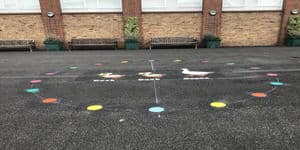
There are many versions of the game, and one was described in a book by Emily Rose Burt as far back as 1919. A circle marking gives the game a clear place to happen on a busy playground.
Twister
Twister began when Reyn Guyer tried out a paper version, which he called "Pretzel", with his co-workers. The Milton Bradley Company then released it as Twister in 1966. Players place their hands and feet on coloured spots and have to contort their bodies into unusual positions without falling over, so it is a good challenge for flexible children. A thermoplastic Twister marking means the spots are always there, with no mat to lay out or put away.
Noughts and crosses
A noughts and crosses grid builds strategy, turn-taking and critical thinking. Children can use beanbags or hoops as counters, which turns a pencil and paper game into an active one.
Piggy in the middle
Piggy in the middle encourages agility, spatial awareness and group play, as two players pass a ball while the "piggy" between them tries to intercept it. A marked layout shows children where to stand and keeps the game in its own space.
Other traditional designs
Our range of traditional playground game markings also includes snakes and ladders, chess boards, four square and What's the Time, Mr Wolf, so schools can build a whole area of classic games.
What are traditional playground game markings and why do schools use them?
Traditional playground game markings are colourful, durable thermoplastic designs applied directly to tarmac or other outdoor surfaces, which turn classic games into a permanent feature of the playground with no cones, chalk or daily setup needed.
Schools across the UK choose them for four main reasons:
- Durability: unlike chalk or paint, thermoplastic markings last for years with minimal maintenance, which makes them a cost-effective way to support daily play without ongoing expense. Our markings carry a manufacturer's warranty of up to 4 years, subject to ground condition, and we have seen them last over 10 years.
- Daily activity: when games are visible and available every day, children are drawn to the colourful designs and start playing, whether that is a solo game of hopscotch or a group game of piggy in the middle.
- Inclusion and confidence: markings can be designed for children of all abilities, and familiar games help children who feel shy about joining in.
- Structure: game markings give break times and PE lessons a clear structure and a low-maintenance way to keep pupils active and engaged.
How do traditional playground games support PE and the EYFS?
Traditional playground games support PE and the Early Years Foundation Stage (EYFS) because they build coordination, counting, teamwork and communication, so teachers can adapt the same markings for warm-ups, skills practice and structured play.
In PE lessons, hopscotch works for balance and footwork, piggy in the middle for passing and movement into space, and Twister for flexibility. In the early years, the same games support EYFS goals around movement, communication and interaction, as children learn to take turns, follow simple rules and talk to each other while they play. Hopscotch and snakes and ladders also bring counting into the game without it feeling like a lesson.
How should a school choose traditional playground game markings?
A school should choose traditional playground game markings by matching the games to the age of its pupils, planning zones for different kinds of play and making sure the designs invite every child, including those with special educational needs and disabilities (SEND), to join in.
- Age: younger children enjoy simple, colourful games such as hopscotch and duck duck goose, while older pupils enjoy strategy games such as noughts and crosses and chess.
- Playground layout: plan zones for quiet play, active games and free space so games do not clash.
- Inclusion: choose markings that invite participation from all children, including those with SEND.
- Longevity: thermoplastic gives long-lasting use and keeps its bright colours.
We help schools find the right combination of markings for their goals, space and budget. Our in-house team designs and installs thermoplastic playground markings across the UK, and the markings are ready to use within 30 minutes of installation. For more ideas beyond the classics, see our guide to playground games for primary school pupils.
Our philosophy at Uniplay is "to see children of all abilities develop essential skills through play". To talk about traditional games for your playground, call 0333 321 6699, email info@uni-play.co.uk or contact us online and one of our team will be happy to help.
See the full range in our brochure
Download our brochure for the full thermoplastic range, from games and sports courts to sensory and educational markings. Get a free design and quote whenever you are ready.
All prices include installation, and every quote is fully itemised.
- Full range in one PDF
- No obligation
- Free design and quote when you are ready
More from the blog
Walking into the Future: Celebrating Walk to School Week 2025
This week, from 19 to 23 May 2025, schools across the UK are lacing up their trainers for Walk to School Week, a national campaign led by Living Streets to promote healthier, greener, and more enjoyable s
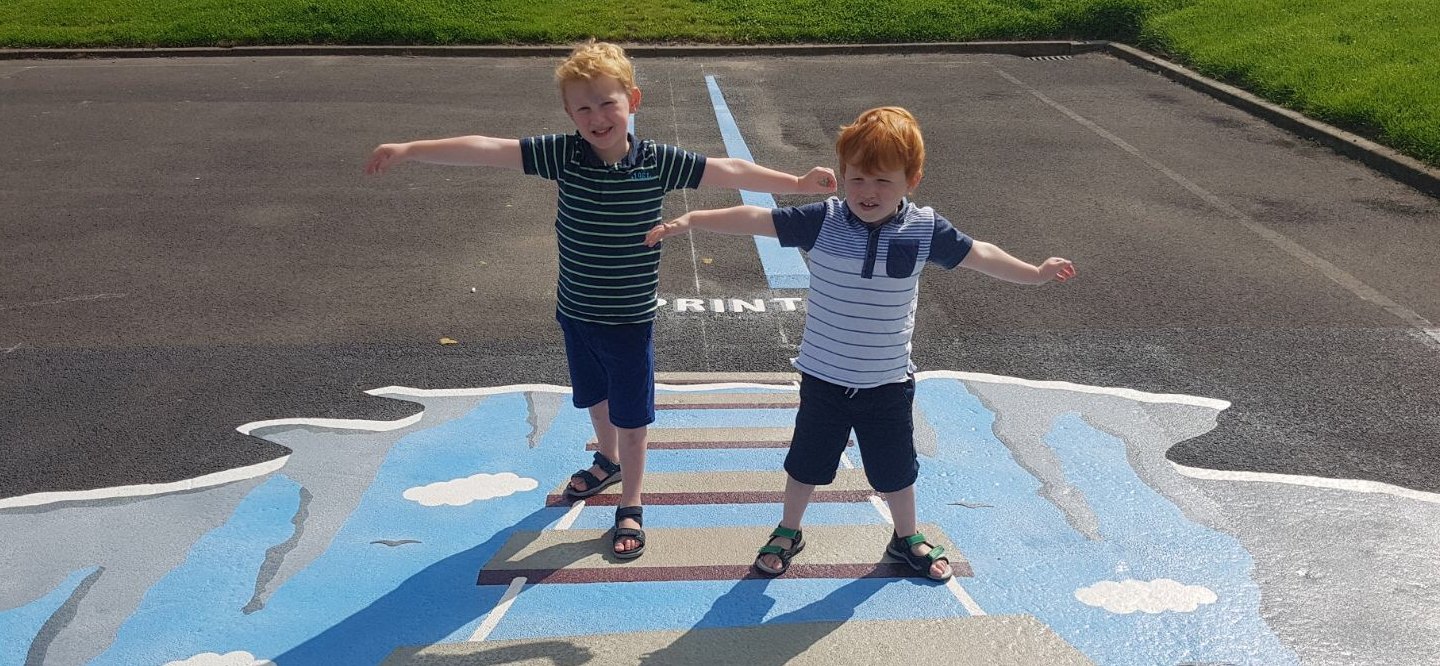
What Is Creative Play? Benefits and Playground Ideas for Schools
What creative play is, how it differs from imaginative and role play, why it matters for development and which playground markings encourage it.
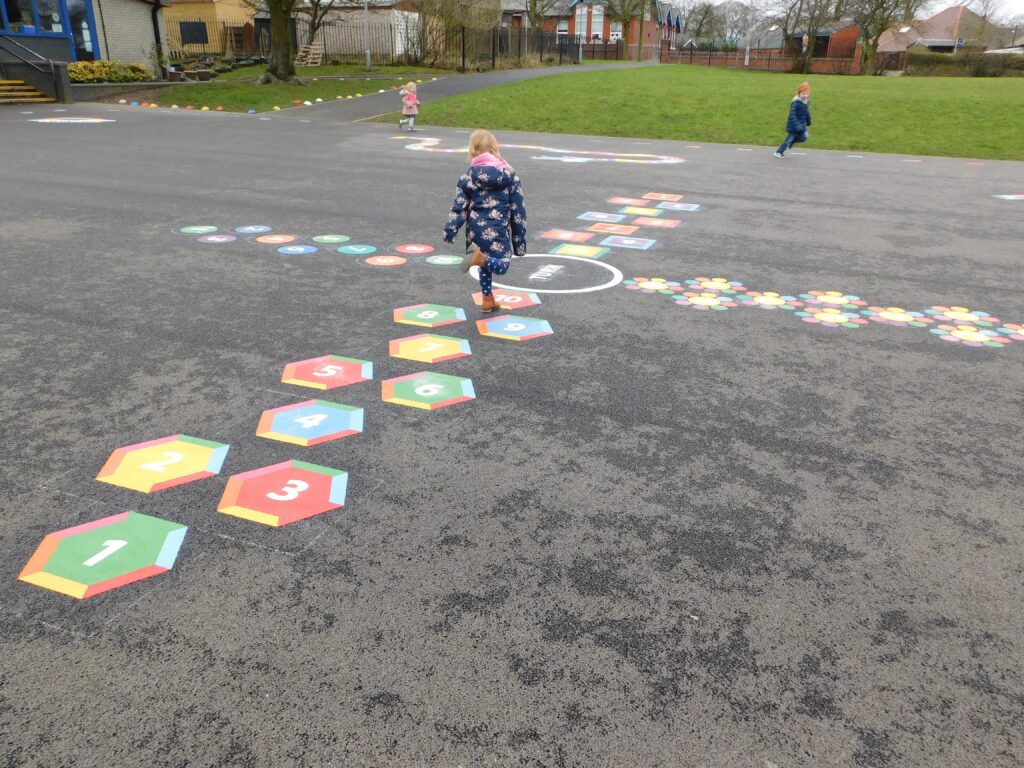
Why Choose Uniplay for Your Playground Marking Project?
Why schools choose Uniplay: in-house design, our own DBS-checked installers, long-lasting thermoplastic markings and a free quote.