
Small Playground Ideas for Schools with Limited Space
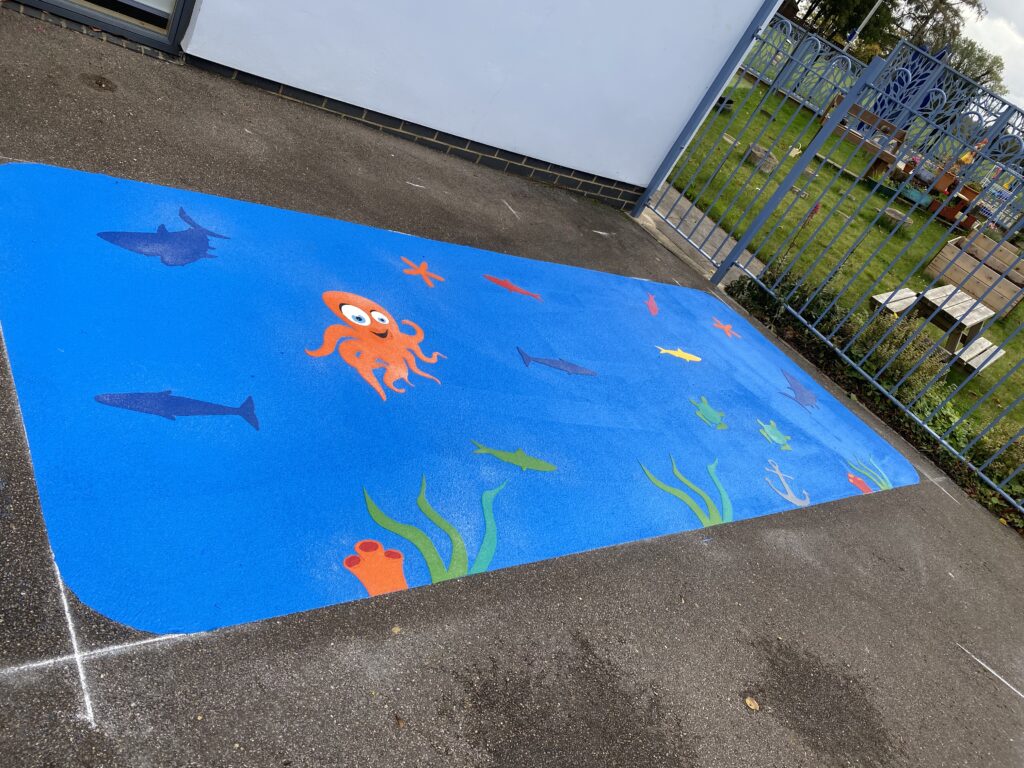
Small playground ideas help schools get more play, movement and learning out of a limited or awkwardly shaped outdoor space. Thermoplastic playground markings suit small playgrounds especially well because they sit flat on the existing surface, take up no room and leave children free to run.
Plenty of schools, nurseries and academies, particularly in towns and cities, work with a modest yard. The size of the playground does not have to limit what it offers. With a smart layout and the right markings, a small playground can be as fun, educational and active as a much larger one, without large equipment or building work.
What are the best small playground ideas for schools?
The best small playground ideas for schools are multi-use markings, scaled-down traditional games, compact learning markings and clearly zoned areas, because each one lets several groups of children play different games in the same limited space at the same time.
Multi-use courts and markings
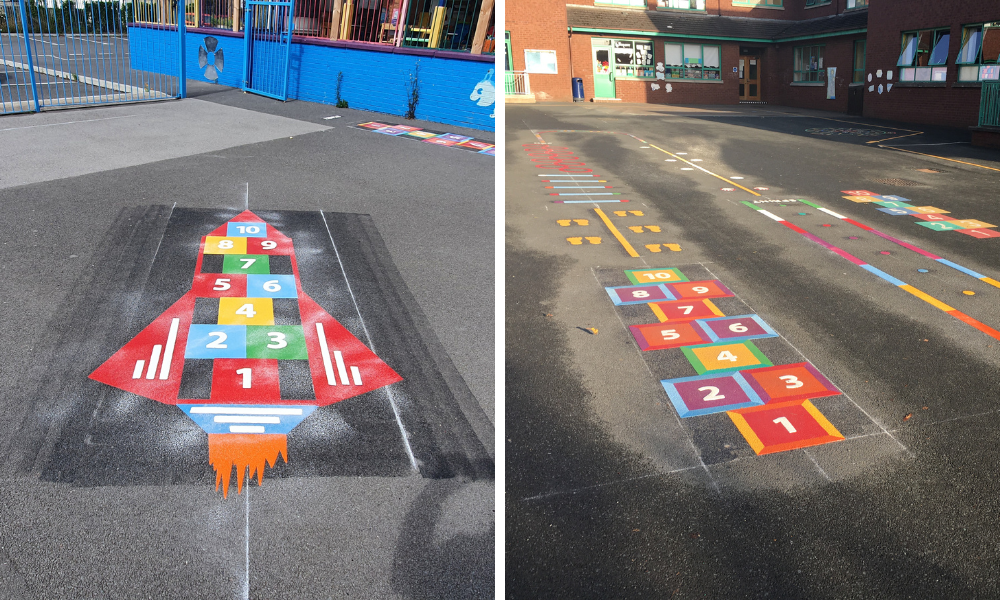
If space is tight, choose markings that do more than one job. Multi-court markings combine several popular games into one layout, so the same area can host football at lunchtime and netball or basketball in a PE lesson. A number grid can be a counting game, a hopping game and a maths lesson.
Scaled-down traditional games
Hopscotch, snakes and ladders, mazes, number games, grids and targets all work in small playgrounds. Our designers scale traditional games down to fit the space you have, including odd corners, narrow strips and irregular shapes.
Learning markings and themed circuits
Number grids, phonics trails, alphabet games and themed circuits turn a small yard into an outdoor classroom. They take up very little space and can run along the edges of the playground, leaving the middle clear for running games.
Active zones and mile tracks
Active zones with skipping, hopping and jumping spots pack a lot of movement into a few square metres. A mile track can follow the boundary of a small playground so pupils clock up laps without taking over the main space.
Colour-coded zones and pathways
Colour-coded zones, pathways and boundary lines help a small playground feel organised. Children can see where each game starts and ends, which reduces collisions and arguments over space.
Which playground markings should a school choose first when space is limited?
A school with limited space should usually choose active and sports markings first, because children have fewer chances to move in the classroom than to read or count, then add learning markings with broad appeal and let pupils help make the final choice.
We have a wide range of markings that build literacy and maths, but most schools with small playgrounds start with markings for physical development and motor skills. If you are not sure where to begin, our Daily Mile track markings are often a good first step.
Keep the appeal as broad as possible. Football and basketball are reliable favourites, but in a small playground a single football game can push everyone else to the edges, and boys can still tend to dominate it. Games with wider appeal, such as active zones, tennis or rounders, help more pupils get involved.
Next, decide on scale. Depending on your space, you may need to choose between one or two large games or three to five smaller ones. Whichever you pick, keep the mix varied so it covers a range of skills and interests.
Finally, give pupils the final say. Narrow the options down to the ones that fit your space, budget and learning objectives, then let the children choose between two to four of them. They may go for an old favourite like a multi-court, or something different such as snakes and ladders, a maze or letter games.
How do you plan a small or odd-shaped school playground?
You plan a small or odd-shaped school playground by thinking about movement, accessibility, the age of the children and the flow of play across the space, then scaling each marking to fit, ideally after a site visit so the design matches the real ground.
- Movement: children need room to move freely. In a tight space, multi-use markings and themed designs give several games without filling every square metre.
- Accessibility: markings sit flat on the surface, so children with mobility needs can use them as easily as anyone else.
- Age of the children: choose age-appropriate games for the pupils who will use the space, from simple number and colour games for younger children to courts and targets for older ones.
- Flow: plan how children will move from one end of the playground to the other during play, so there is still space for others to join in. Poor flow in an odd-shaped space quickly leads to disorganised play.
Our design team works closely with our installation team so that every measurement is accurate and each marking fits the space as planned.
How can a small school playground still support learning through play?
A small school playground still supports learning through play when it includes educational markings for maths, literacy and physical education, such as number trails and ladders, alphabet games and shape recognition, which help pupils practise classroom learning outdoors.
Bringing learning into the playground encourages more physical activity and makes lessons more engaging, particularly for younger pupils and those with additional needs. Teachers can take a small group outside for a counting or phonics activity without needing a large area or any equipment.
Why do thermoplastic playground markings suit small playgrounds?
Thermoplastic playground markings suit small playgrounds because they are installed directly onto tarmac or concrete, take up no physical space, need little maintenance and stand up to the heavy footfall a busy small playground gets every day.
- They are made from non-toxic thermoplastic, are slip-resistant and can be used in all weathers.
- Their colours hold up well in sunlight, so games stay easy to see.
- They carry a manufacturer's warranty of up to 4 years, subject to ground condition, and we have seen them last over 10 years.
- Installs are ready to use within 30 minutes.
- Prices start from around £50 for a single design (indicative, excluding VAT), and our playground marking bundles group popular designs together.
Unlike fixed play equipment, markings leave the whole surface usable, which is exactly what a small playground needs.
How does our team design and install markings for a small playground?
Our team designs and installs markings for small playgrounds in house, from the first site visit and layout to the finished installation, so the design fits your exact space and your school deals with one team throughout.
We start by understanding your space, your goals and the age groups who will use it, whether you want more active play, more outdoor learning or better social play. Our designers then create bespoke playground markings from scratch, or adapt designs from our thermoplastic playground markings range to fit. We are happy to share examples of previous small and odd-shaped playgrounds for inspiration.
Our DBS-checked installation team works around your school timetable to keep disruption to a minimum. To arrange a free site visit or design consultation, call us on 0333 321 6699 or email info@uni-play.co.uk.
See the full range in our brochure
Download our brochure for the full thermoplastic range, from games and sports courts to sensory and educational markings. Get a free design and quote whenever you are ready.
All prices include installation, and every quote is fully itemised.
- Full range in one PDF
- No obligation
- Free design and quote when you are ready
More from the blog
St Barnabas get active with 1k a day
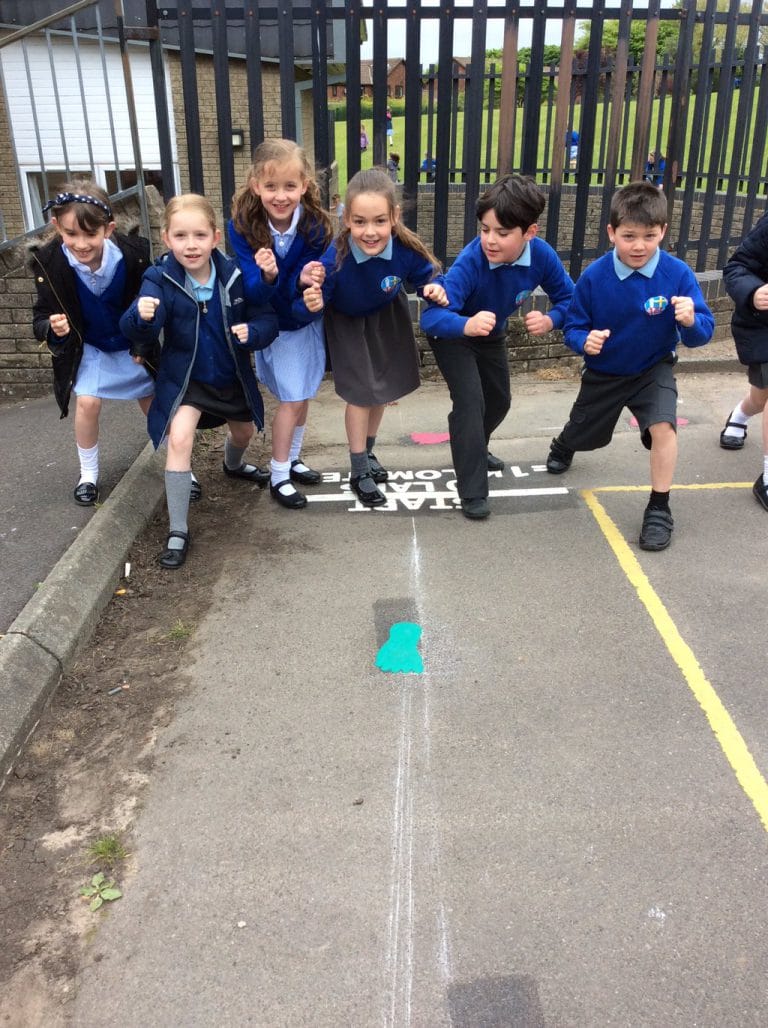
Uniplay were delighted to be asked to install a 1 kilometre circuit in thermoplastic footprints at St Barnabas Primary School in Darwen.
Supporting Sport and Physical Development Clubs
We absolutely love to promote grassroots sport and physical development in young people, and whenever possible try to assist in promoting all types of sport
The Daily Mile: What It Is and How Schools Can Run It
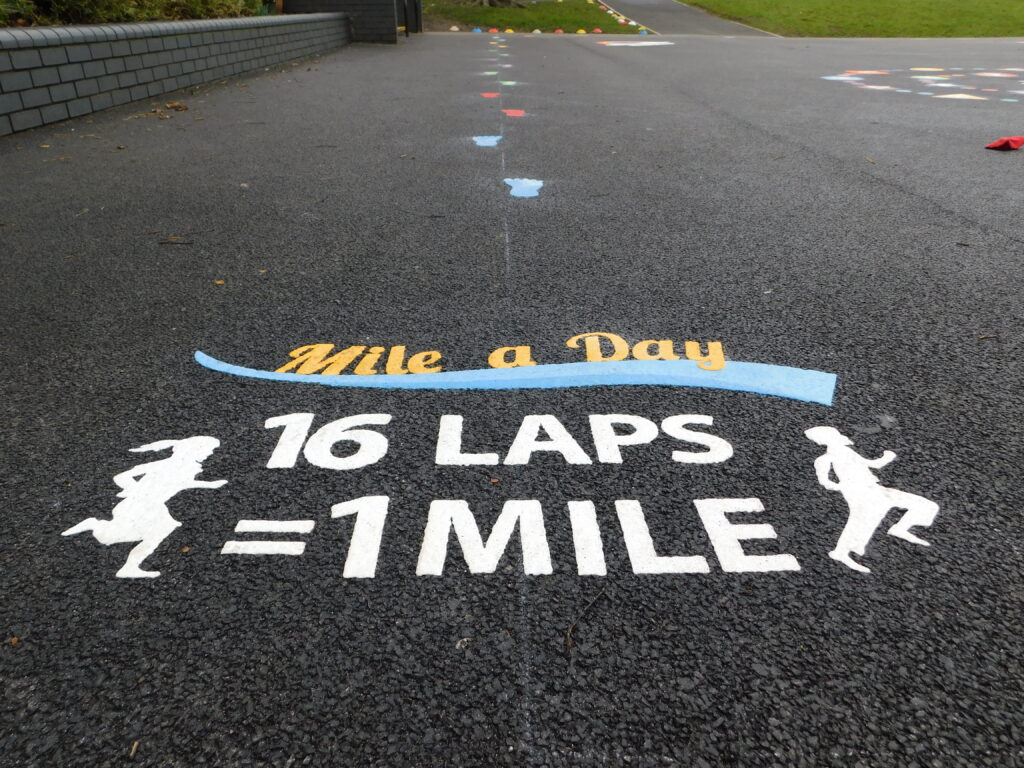
What The Daily Mile is, who started it, how it benefits children and how schools can set up a route, with or without a marked track.